

Do You Have Chronic Headaches? Common Symptoms Explained
Do You Have Chronic Headaches? Common Symptoms Explained
Headaches are common, but when they occur frequently or last for weeks or months, they may indicate a more serious condition. Understanding the symptoms of chronic headaches can help you recognize when your discomfort is more than an occasional headache. Identifying the warning signs early allows you to seek medical advice and receive the right treatment before the condition affects your daily life.
In this guide, we'll explain the most common chronic headache symptoms, their possible causes, and when you should consult a healthcare professional.
What Are Chronic Headaches?
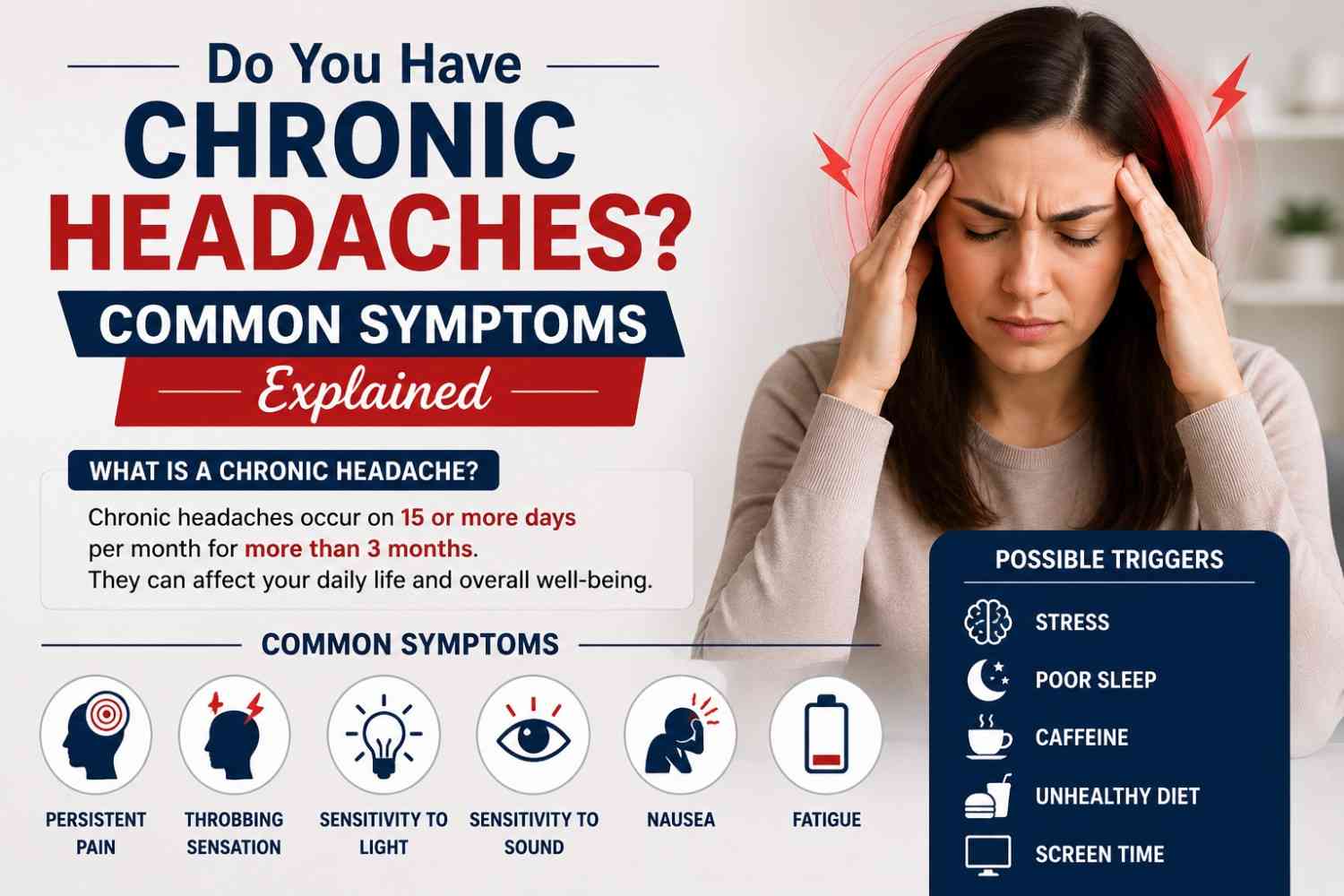
Chronic headaches are headaches that show up on 15 or more days each month for at least 3 consecutive months. They may swing in intensity, duration, and even in their type. For some folks, it feels like a steady, muted ache, while for others it becomes a very sharp, pulsing pain that messes with work, sleep, and everyday tasks.
Knowing the symptoms of chronic headaches can help determine whether you are dealing with a long-term headache disorder or another underlying medical condition.
Common Symptoms of Chronic Headaches
The symptoms of chronic headaches can differ depending on the type of headache, but several signs are commonly reported.
1. Frequent or Daily Headaches
One of the most noticeable chronic headache symptoms is that you’re dealing with headaches about every day. The pain can keep going for several hours, or it may drag on through the entire day.
2. Persistent Head Pain
Unlike the random headaches, the chronic kind tends to come with ongoing or repeated pain, sort of a steady nuisance. In other words, the headache signs can stay put even after taking some over-the-counter pain medication, you know, without a lot of improvement.
3. Throbbing or Pressure-Like Sensation
Some folks describe the pain as pulsating a bit, while others feel it like a tight band-like pressure, sort of wrapping around the cranium, nearly like a clamp, you know. The unease might pop up on just one side of the skull. Or it can be on both sides, too, depending.
4. Sensitivity to Light and Sound
A lot of people who deal with chronic migraine symptoms often get kinda overly sensitive to bright lights, loud noises, or even strong odors. Because of that, regular daily activities can feel awkward, annoying, or just hard to manage, sometimes all at once.
5. Nausea or Dizziness
Certain chronic headaches, especially migraines, may be accompanied by nausea, dizziness, or even vomiting.
6. Difficulty Concentrating
Long-lasting headaches can affect focus, memory, and productivity. Many people report mental fatigue and difficulty completing routine tasks.
7. Neck or Shoulder Pain
Muscle tension around the neck and shoulders often accompanies chronic headaches, particularly tension-type headaches.
Causes of Chronic Headaches
Understanding the causes of chronic headaches is essential for choosing the right treatment. Several factors can contribute to frequent headaches, including:
Chronic stress and anxiety
Poor sleep quality
Dehydration
Skipping meals
Eye strain from prolonged screen use
High blood pressure
Hormonal changes
Medication overuse
Neurological conditions
Migraine disorders
Sometimes, chronic headaches may also be linked to sinus problems, infections, or other medical conditions that require professional evaluation.
Different Types of Chronic Headaches
Several headache disorders can become chronic if left untreated.
Chronic Migraine
This condition involves migraine attacks occurring 15 or more days each month. Common chronic migraine symptoms include severe throbbing pain, nausea, visual disturbances, and sensitivity to light or sound.
Chronic Tension-Type Headache
These headaches usually produce mild to moderate pressure across the forehead or the back of the head. They often develop due to stress or muscle tension.
New Daily Persistent Headache
This type begins suddenly and continues daily without significant relief. The pain may resemble either migraine or tension headaches.
Hemicrania Continua
A less common condition characterized by constant pain on one side of the head that responds well to specific medications.
When Should You Be Concerned?
While occasional headaches are usually harmless, some symptoms of chronic headaches require immediate medical attention.
Seek medical care if you experience:
Suddenly, a severe headache unlike any before
Headache after a head injury
Vision loss or double vision
Difficulty speaking
Weakness or numbness
Confusion
Persistent vomiting
Fever with severe headache
Headaches that continue getting worse
Ignoring these symptoms could delay the diagnosis of an underlying health condition.
When to See a Doctor for Chronic Headaches
Knowing when to see a doctor for chronic headaches is important. You should consult a healthcare professional if:
Your headaches occur more than 15 days each month.
Pain medications no longer provide relief.
Headaches interfere with work or daily activities.
You experience neurological symptoms such as weakness or vision changes.
The headaches become more frequent or severe over time.
Early diagnosis can help identify the underlying cause and prevent complications.
Diagnosis and Treatment
Doctors usually begin by reviewing your medical history and headache pattern. Additional tests such as neurological examinations, CT scans, or MRI scans may be recommended to rule out serious conditions.
Treatment depends on the underlying diagnosis and may include:
Preventive medications
Migraine-specific treatments
Lifestyle modifications
Stress management
Physical therapy
Better sleep habits
Hydration and balanced nutrition
If you're searching for specialized chronic headache treatment in Chandigarh, consulting an experienced neurologist can help identify the root cause and create a personalized treatment plan based on your symptoms.
Tips to Reduce Chronic Headaches
Along with medical treatment, healthy habits can help reduce headache frequency.
Stay hydrated throughout the day.
Maintain a regular sleep schedule.
Eat balanced meals without skipping breakfast.
Limit caffeine and alcohol.
Exercise regularly.
Manage stress through yoga or meditation.
Reduce prolonged screen exposure.
Keep a headache diary to identify triggers.
These simple lifestyle changes can support your overall treatment plan and improve your quality of life.
Conclusion
Noticing the symptoms of chronic headaches is kinda the first step toward getting effective treatment, and it really matters. When you get frequent headaches, plus sensitivity to light, nausea, or a headache that doesn’t seem to let up, those persistent signs should never be casually ignored, especially if they start messing with your everyday routine. Learning what might be behind chronic headaches, and also figuring out when to see a doctor for chronic headaches, can help you get a faster diagnosis and, honestly, better control over what’s happening.
If your headaches have started to happen a lot, or they just won’t go away, it is best to see a qualified healthcare professional. Getting checked early and getting the right kind of care can help lower the discomfort, make day-to-day functioning easier, and also stop some long-term problems from building up.