
What Are Developmental Disorders? Causes, Symptoms, and Treatment Options
What Are Developmental Disorders? Causes, Symptoms, and Treatment Options
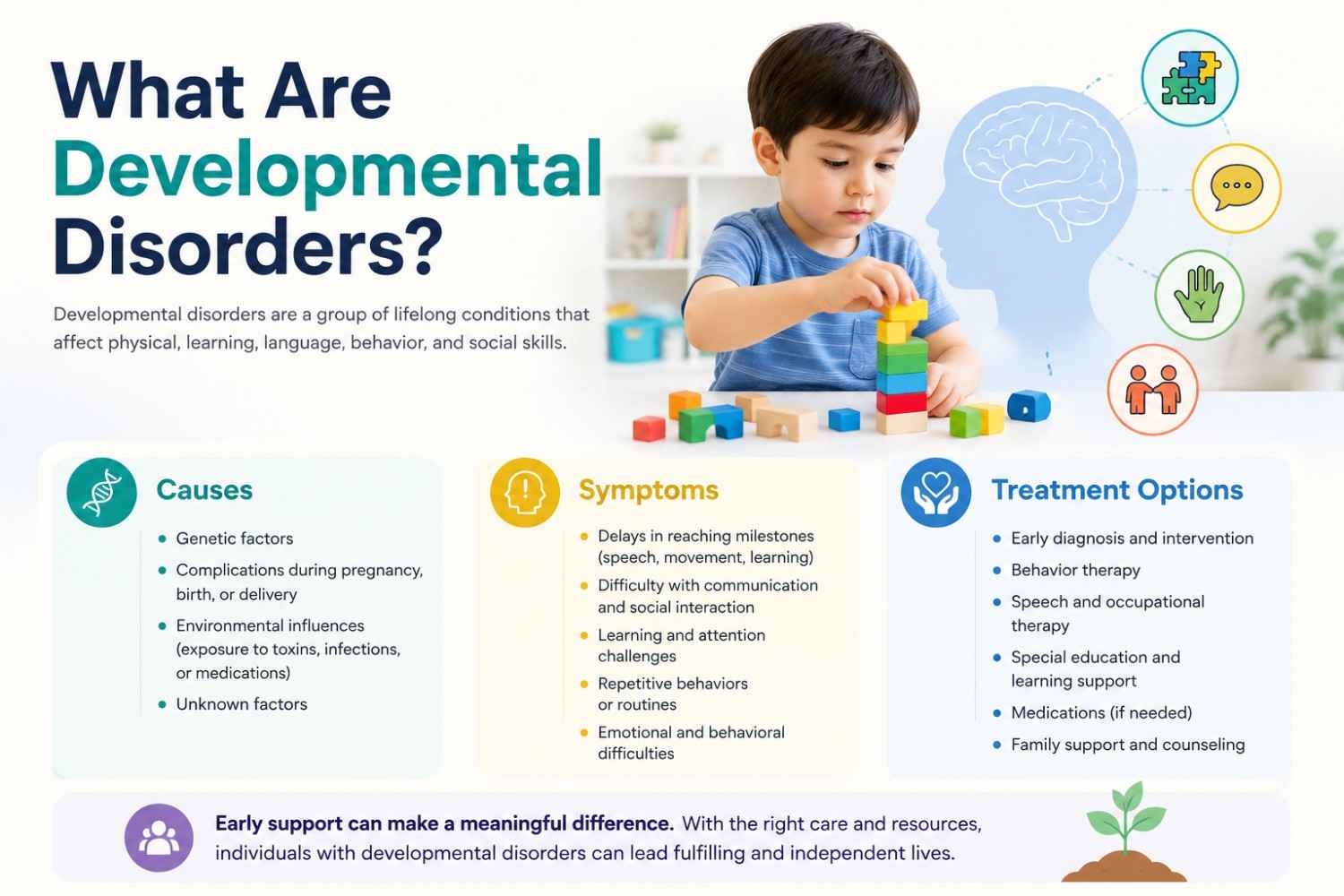
Developmental Disorders are a group of conditions that affect a child's physical, cognitive, communication, social, or emotional development. These conditions often appear during early childhood and may impact learning, behavior, movement, and daily activities. While every child develops at their own pace, persistent delays in achieving developmental milestones may indicate the need for professional evaluation. Early diagnosis and timely intervention can significantly improve a child's quality of life and long-term outcomes.
Understanding the Types of Developmental Disorders
There are several Types of Developmental Disorders, each affecting different aspects of a child's growth and development. Some of the most common include:
Autism Spectrum Disorder (ASD): Affects communication, social interaction, and behavior.
Attention-Deficit/Hyperactivity Disorder (ADHD): Causes difficulties with attention, impulsivity, and hyperactivity.
Speech and Language Disorders: Impact a child's ability to communicate effectively.
Learning Disabilities: Affect reading, writing, mathematics, or problem-solving skills.
Intellectual Developmental Disorders: Influence cognitive functioning and adaptive skills.
Understanding these conditions helps parents seek appropriate care and support at the earliest stage.
Causes of Developmental Disorders
The Causes of Developmental Disorders are often complex and may involve multiple factors. In many cases, no single cause can be identified. Some common contributing factors include:
Genetic or inherited conditions
Premature birth or low birth weight
Complications during pregnancy or childbirth
Brain injury or neurological disorders
Exposure to infections, toxins, or harmful substances during pregnancy
Nutritional deficiencies during early childhood
Although some risk factors cannot be prevented, regular prenatal care and healthy lifestyle choices during pregnancy can reduce certain risks.
Developmental Disorders Symptoms
Recognizing Developmental Disorders Symptoms early is essential for effective intervention. Symptoms vary depending on the condition and the child's age but may include:
Delayed speech or language development
Difficulty making eye contact or interacting socially
Problems with learning or following instructions
Repetitive movements or restricted interests
Poor motor coordination or delayed walking
Hyperactivity, impulsiveness, or difficulty concentrating
Trouble adapting to changes in routine
Parents should monitor developmental milestones and consult a healthcare professional if they notice persistent delays or unusual behaviors.
How Are Developmental Disorders Diagnosed?
Diagnosing Developmental Disorders involves a comprehensive assessment by specialists such as developmental pediatricians, neurologists, psychologists, or speech therapists. The evaluation may include developmental screening, medical history, physical examination, behavioral observations, and standardized assessment tools.
Early diagnosis enables families to access therapies and educational support to help children learn the life skills they need and to promote their functioning.
Treatment for Developmental Disorders
There is no one-size-fits-all approach to Treatment for Developmental Disorders. The treatment plan depends on the child's specific diagnosis, age, and developmental needs. Common treatment options include:
Speech and language therapy
Occupational therapy
Physical therapy
Behavioral therapy
Special education programs
Parent training and counseling
Medications for associated conditions such as ADHD or anxiety, when recommended by a specialist
The goal of Treatment for Developmental Disorders is to enhance communication, learning, independence, and social skills while helping children reach their full potential.
When considering specialized Developmental disorders treatment in Chandigarh and Developmental disorders treatment in Noida, families should choose developmental pediatricians and therapy professionals who are knowledgeable about developmental delays, can make a personalized care plan, and can provide information on other professionals who might also be helpful.
Can Developmental Disorders Be Prevented?
Prevention is not always possible for Developmental Disorders as many are associated with a genetic or neurological cause. Parents can help minimize some of these risks by keeping pregnant, going to regular prenatal visits, having their children eat well, keeping them up to date on childhood immunizations and getting early medical attention if developmental problems arise.
The most important is that screening and intervention are still the best ways to enhance learning outcomes for children who experience developmental challenges.
Conclusion
There are a number of areas of a child's development that can be affected by a developmental disorder, but if the disorder can be detected early, diagnosed accurately, and intervened in a timely fashion, the impact on a child's development can be significantly reduced. Once parents are armed with knowledge of the Causes of Developmental Disorders, they can more easily detect Developmental Disorders Symptoms and learn about the various Types of Developmental Disorders and the Treatment for Developmental Disorders so that they can make informed decisions regarding their child's care.
Do not wait until your child's symptoms get better to seek help. A developmental or developmental delay evaluation and treatment in Chandigarh by a specialist can help your child get the support and therapies necessary to improve developmental outcomes and live a more independent and fulfilled life.