

What Does Anxiety Feel Like? 12 Signs You May Be Experiencing Anxiety
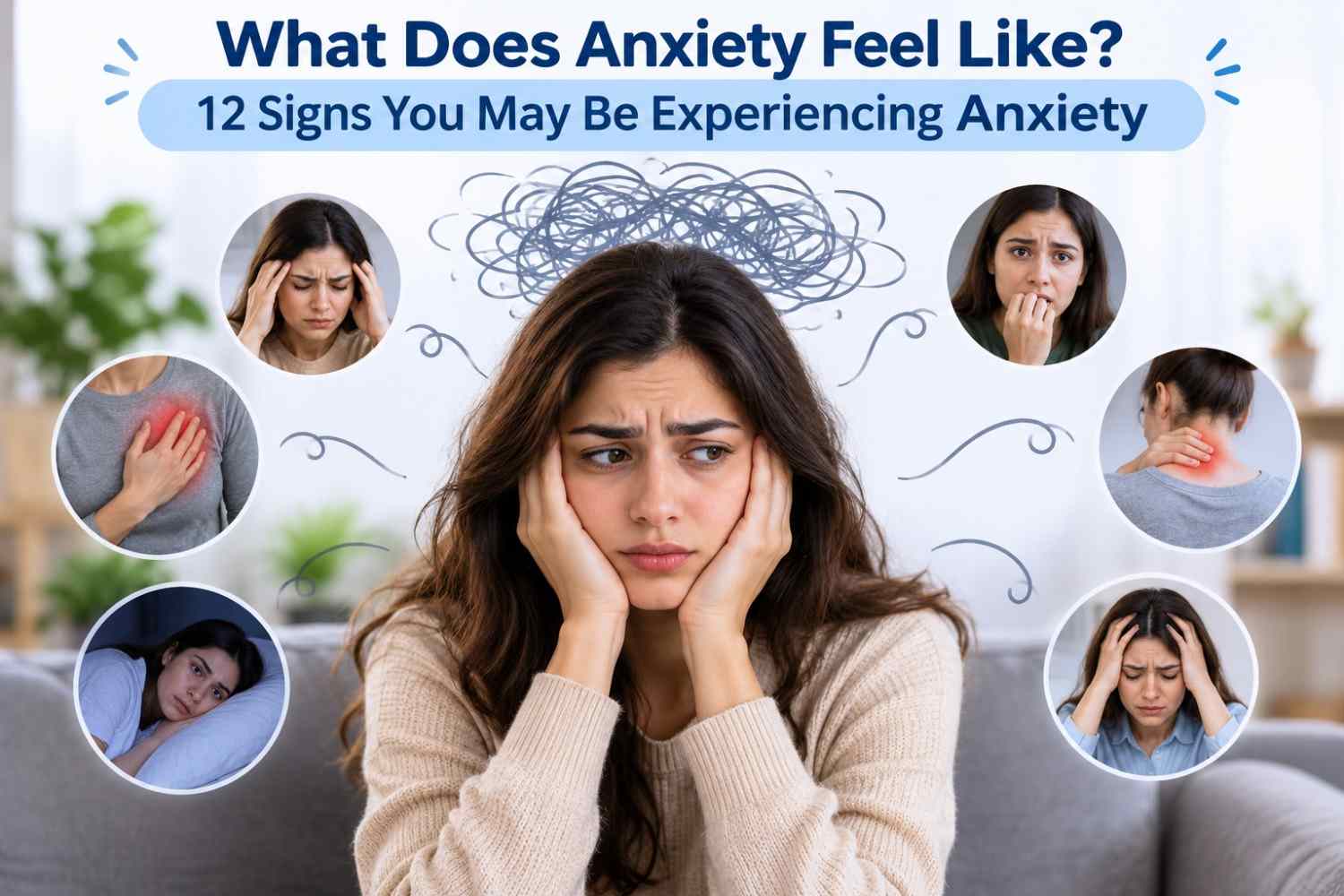
What Does Anxiety Feel Like? 12 Signs You May Be Experiencing Anxiety
Anxiety can affect your thoughts, emotions, and physical health in different ways. If you wonder what does anxiety feel like, you may notice a racing heartbeat or constant worry, while others struggle with poor sleep, muscle tension, or difficulty concentrating. Understanding these signs can help you recognise when stress may need more attention. If symptoms begin affecting everyday life, professional guidance, including Anxiety depression treatment in Noida, may help you understand your experiences and explore suitable support.
This guide talks about how anxiety may manifest, its common symptoms (12 of them), possible causes and how you should know when to seek help from a specialist. This information is intended as a general guideline..
What Does Anxiety Feel Like?
Anxiety, however, is the response of the body to fear, uncertainties, or stress. Anxiety serves as a means of preparing the individual for the upcoming situation. It could be preparing for examinations or any other source of stress. But anxiety can be a serious problem if it keeps on repeating itself or if one is anxious over something that is out of the ordinary.
For the query on what does anxiety feel like, there are several factors that should be considered first. There are some people who may face problems like restlessness, while others may be facing problems like anxiety, digestion problems, or feeling that something bad is going to happen.
Anxiety can be experienced normally by individuals, although it becomes a problem if it continues or is too overwhelming.
Also read : Ayurveda vs Modern Medicine: Differences, Benefits, Risks and Uses
12 Signs You May Be Experiencing Anxiety
The various forms through which anxiety can present itself are discussed below. Should you have been asking yourself what anxiety is like, you may realize some of the changes that occur including emotional issues, physical issues, or behavior that interferes with your daily tasks. Some of the signs which come about due to anxiety include the following.
Constant Worry About Everyday Situations
It is possible that you will always be afraid of something or other concerning work, home, money, health, or even something that needs to be done in the future. While solving one issue, another emerges. It becomes hard to be present here and now.
A Racing Heart or Noticeable Heartbeat
An elevated heartbeat or an excessively high heartbeat can be as a result of anxiety. There is a bodily response that occurs due to anxiety leading to alertness. However, this does not necessarily mean that all heart pains and heartbeats are as a result of anxiety.
Restlessness and Feeling on Edge
It can prove difficult for you to sit, relax, and be comfortable with nothing pressing on your mind. Smaller things have the tendency to really annoy someone when their mind is already exhausted.
Difficulty Concentrating
The thoughts of being anxious will be in competition with the task that you currently have to do. You might find yourself re-reading the same email and forgetting what the other person has said or even struggling to make a decision.
Muscle Tension and Body Aches
These can include the tightening of shoulder muscles, tight jaw muscles, neck pain, and headaches. There are people who are physically tense but do not realize it. In case the pain persists, then one must see a doctor rather than blaming everything on anxiety.
Sleep Problems
Your mind will not stop thinking about things that occurred during the day or things that may happen in the future. In other words, you might develop a situation whereby your sleep is disturbed by waking up several times during the night or feeling drowsy after getting enough sleep.
Sweating, Shaking, or Feeling Dizzy
Perspiration, shakiness, dizzy spells, or weakness could also be the work of anxiety. These could turn out to be scary experiences, especially when they happen all of a sudden. They might also come from another source, thus the importance of getting evaluated.
Stomach Discomfort or Nausea
The stomach can become upset prior to the meeting, during a conflict, or before any problem arises. You may experience anxiety symptoms that impact your stomach system by causing nausea, stomach cramps, or even problems with bowel movements.
Irritability and Emotional Sensitivity
You can easily become frustrated because of small issues. It takes a lot of brain capacity to be anxious; this means that you won't be able to be patient with your daily routine.
Avoiding Situations That Feel Difficult
You can avoid calling, avoid going out with your friends, or just keep avoiding any activities that make you afraid. Even though avoiding things may seem like an escape in the short term, it might end up being an issue for some fears.
Repeatedly Seeking Reassurance
One may check whether everyone is okay, one may even go ahead and confirm everything for himself or herself, or one may ask for confirmation before doing anything at all. This can offer temporary relief, but one ends up being anxious afterwards.
A Sense That Something Bad Will Happen
At times, however, anxiety creates a constant sense of threat when there appears to be no reason for the same. It may also result in a perception that some dreadful event is bound to occur in the absence of any evidence for the same.
Also read : What to Expect from Panchakarma Therapy: From First Consultation to Recovery
How Does Anxiety Feel Physically and Mentally?
Understanding what does anxiety feel like also means looking at the connection between the mind and body.
Physical symptoms
When someone feels anxious, their body activates a fight-or-flight reaction, which results in an increased heart rate, sweating, trembling, tight muscles, trouble breathing, dizziness, or stomach problems. This can happen despite the lack of physical danger.
Mental and emotional symptoms
Concerning psychological symptoms, one experiences anxiety as being unable to shut down her mind. One is likely to over-analyze discussions and situations, become unsure and unable to relax. In addition, one gets fear, irritability, or concentration problems.
What about physical signs? Anxiety feels like tension, fluttering in the stomach, and a racing heart. How about mental signs? Anxiety feels like always worrying and expecting the worst from situations.
Not everyone experiences all these symptoms, and their presence is not enough to diagnose someone.
What Can Trigger Anxiety?
There are many sources of anxiety including work pressure, money issues, problems in relationships, concerns about health, big changes in life, and stressful experiences. You might want to know what does anxiety feel like and this may shed some light on how anxiety occurs. Other biological causes and family history may be involved as well. There are often several elements which play their role.
It can be helpful for you to spot any patterns in your experiences. You should look into the timing of your symptoms, what led up to them, how long they lasted, and whether they affected your ability to sleep, work, or engage socially.
When Should You Seek Professional Help?
For those seeking information regarding anxiety disorder cognitive behavioural therapy in Noida, a professional can help decide if you qualify for CBT and the treatment that may be right for you.
A professional from Dr. Sanjeev Kalra and Niramaya The Mind Centre can help you choose the right treatment for mental health disorders.
For those seeking anxiety depression treatment in Noida, it is better to consult a professional rather than any other information available on the Internet.
How Is Anxiety Treated?
Different alternatives exist depending on the way the symptoms are manifested, the diagnosis made, personal preferences, among other things. If you are wondering about what it is like to have an anxiety disorder, understanding the symptoms is the first thing that you should take into consideration. This can be accomplished through the use of various strategies such as cognitive behavior therapy, also referred to as CBT.
When looking for information concerning Cognitive Behavioral Therapy for Anxiety Disorders in Noida, you will receive the best assistance from a professional in determining whether CBT is appropriate for you.
The experts from Dr. Sanjeev Kalra and the Niramaya The Mind Centre will provide you with the necessary assistance in making the best choice when it comes to treatments for psychological disorders.
If you are looking for anxiety depression treatment in Noida, make sure to seek professional advice and not just any online data.
What Can You Do to Manage Anxiety Day to Day?
Alongside professional care, some everyday habits may help you cope with anxiety:
Maintain a regular sleep routine: Aim for consistent sleeping and waking times.
Move your body regularly: Walking or other suitable physical activity may support emotional well-being.
Practise slow breathing: Gentle, comfortable breathing can help you manage moments of tension.
Limit excessive caffeine: Notice whether coffee, tea, or energy drinks worsen your symptoms.
Talk to someone you trust: Sharing your concerns may help you feel less alone.
Break tasks into smaller steps: Focus on one manageable action instead of trying to solve everything at once.
These strategies may support well-being, but they do not replace professional care when symptoms are persistent or severe.
Conclusion
Recognizing the symptoms of anxiety will enable you to be aware of changes in your thought pattern, emotions, and physical reactions. In case you are curious about the nature of anxiety, you need to remember that it is not only a state of continuous fear but also physiological stress.
Niramaya The Mind Centre, in consultation with Dr. Sanjeev Kalra, presents a forum where you can get in touch with us if you are interested in mental health counseling. Through counseling, you may come to know about the situations that you have gone through and find out whether an appropriate method works for you.
If anxiety has started affecting your daily activities, then you can get in touch with us and come to know about your problems.