

Homeopathy vs Ayurveda vs Allopathy: Differences, Benefits & Which Is Better?
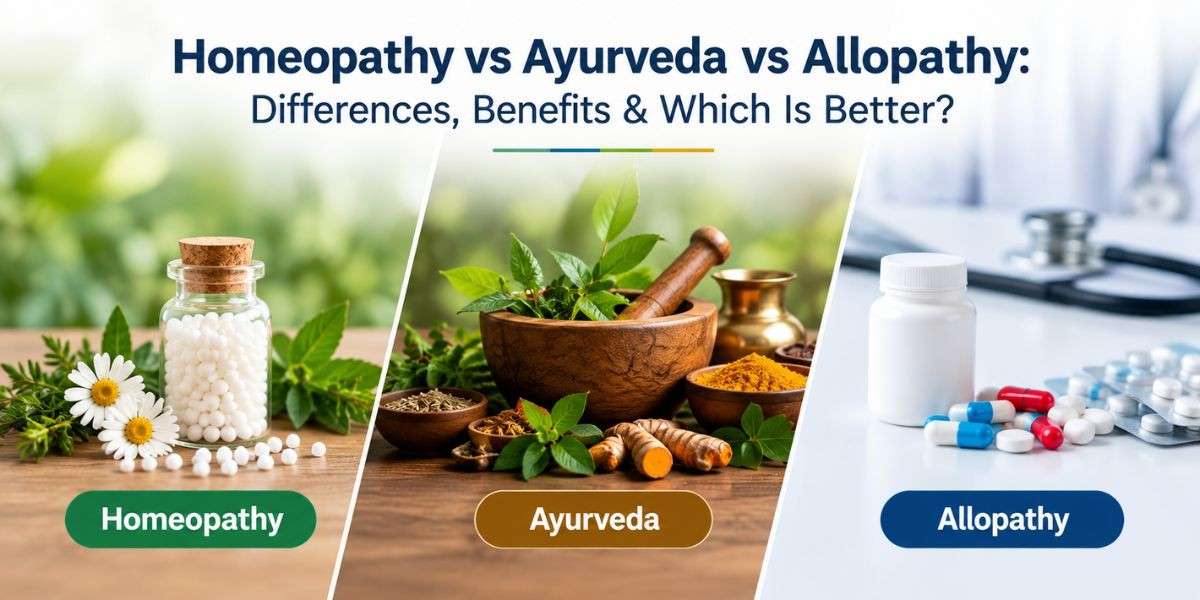
Homeopathy vs Ayurveda vs Allopathy: Differences, Benefits & Which Is Better?
When people search for allopathy vs homeopathy, homeopathy vs ayurveda, or homeopathy vs allopathy, they are usually looking for a practical answer: Which treatment is better for me? The reality is more nuanced. Ayurveda, Homeopathy, and modern medicine follow different principles, use different treatment approaches, and have different levels of scientific evidence for specific conditions.
For patients exploring Integrative Ayurveda Care, understanding these differences can help them make a more informed healthcare decision. At Niramaya The Mind Centre, Prof. Dr. Sanjeev Kalra brings extensive experience in Ayurveda-Neuropsychiatry to individualized patient care, with an emphasis on understanding the person's condition rather than choosing a medical system simply because it is popular.
Understanding the Three Medical Systems
Before comparing them, it is important to understand what Ayurveda, Homeopathy, and modern medicine actually involve. A fair comparison should separate traditional principles from claims that have been scientifically established.
What Is Allopathy or Modern Medicine?
In India, the word allopathy is commonly used to describe conventional or modern medicine. In professional medical writing, conventional medicine or modern medicine is generally more precise.
Modern medicine is based on biomedical science and uses methods such as clinical examination, laboratory testing, diagnostic imaging, pharmacology, medicines, surgery, rehabilitation, and preventive healthcare.
Its major advantage is the depth of evidence available for many interventions. Depending on the condition, modern medicine can provide emergency treatment, surgical care, antibiotics when clinically appropriate, vaccines, specialist management, and treatments for many acute and chronic diseases.
However, conventional medicines can also have contraindications, adverse effects, and drug interactions. Modern does not mean without risk; it means treatment decisions are generally evaluated through modern scientific and clinical frameworks.
What Is Ayurveda?
Ayurveda is a traditional Indian medical system with a long documented history. It uses a holistic framework that considers factors such as diet, lifestyle, constitution, and traditional concepts including Vata, Pitta, Kapha, Prakriti, and Vikriti.
Depending on the practitioner and the patient's needs, Ayurvedic care may involve dietary recommendations, lifestyle measures, herbal preparations, and traditional therapies.
This makes Ayurveda different from conventional medicine in its therapeutic system and overall philosophy. However, it is important to avoid the common assumption that every traditional treatment has already been clinically proven.
According to NCCIH, research on Ayurveda varies considerably by treatment and condition. Some studies have suggested possible benefits for particular health problems, but many studies have limitations, and evidence remains insufficient for many other uses.
Also Read: Holistic Ayurvedic Treatment for Depression Explained Guide
What Is Homeopathy?
Homeopathy originated in Germany more than 200 years ago. Its traditional principles include like cures like and the use of highly diluted preparations. Many homeopathic products are prepared through repeated dilution and shaking, known as potentization.
The homeopathy vs ayurveda difference is therefore much deeper than herbs versus diluted medicines. They developed from different traditions and use different therapeutic concepts.
The scientific evidence also needs careful consideration. NCCIH states that there is little evidence supporting homeopathy as an effective treatment for any specific health condition. It also notes that some products labelled as homeopathic may contain active ingredients and can cause adverse effects or drug interactions.
Ayurveda vs Allopathy vs Homeopathy: Key Differences
A useful medical systems comparison should look at principles, treatment methods, evidence, and safety rather than simply declaring a winner.
This comparison also explains why allopathy vs homeopathy vs ayurveda should not be framed as chemical medicine versus natural medicine. That distinction is too simplistic. A natural substance can have biological effects, and a medicine can have risks regardless of whether it comes from a plant or a laboratory.
Homeopathy vs Ayurveda: What Is the Difference?
The homeopathy vs Ayurveda difference begins with their underlying philosophies.
Ayurveda traditionally considers constitution, lifestyle, diet, and broader mind-body factors. Homeopathy follows a different framework centred around individualized homeopathic remedies and its traditional principles.
They also differ in the types of research available. Some Ayurvedic interventions have been studied for particular conditions, although evidence quality varies. For Homeopathy, major evidence reviews have not established reliable effectiveness for specific health conditions.
Therefore, asking homeopathy vs Ayurveda which is better without naming the health condition does not produce a medically meaningful answer.
The better question is: Which treatment has appropriate evidence, safety, and suitability for this particular patient and condition?
Allopathy vs Homeopathy: Which Is Better?
The search for homeopathy vs allopathy which is better often comes from people who want an alternative to conventional treatment.
Modern medicine has established roles in emergencies, surgery, severe infections, cancer treatment, intensive care, and numerous other conditions. It also offers sophisticated diagnostic tools that can identify conditions requiring urgent intervention.
Homeopathy, meanwhile, follows a different therapeutic model. NCCIH currently reports that there is little evidence supporting homeopathy as an effective treatment for any specific health condition. It also cautions against replacing effective conventional care with homeopathy when that could lead to harmful treatment delays.
Therefore, allopathy vs homeopathy, which is best, cannot be answered by saying that one system is universally superior. The appropriate choice depends on the diagnosis, severity, evidence, risks, and individual circumstances.
When Should You Seek Conventional Medical Care?
Some situations should never become a debate about which alternative system to try first.
Seek appropriate urgent medical care for symptoms such as severe breathing difficulty, suspected heart attack or stroke, major trauma, severe allergic reactions, loss of consciousness, serious bleeding, or other potentially life-threatening symptoms.
Modern emergency medicine exists for situations where rapid diagnosis and intervention can make a critical difference.
Likewise, someone with a persistent or worsening illness should not repeatedly change remedies without establishing what is actually causing the symptoms.
A better healthcare choice begins with proper assessment.
Is Ayurveda Completely Safe?
No medical system should be marketed as completely risk-free.
The competitor content often makes broad statements about Ayurveda having minimal to no side effects. That is too absolute.
NCCIH reports that some Ayurvedic preparations may contain lead, mercury, or arsenic in amounts that can be harmful. Product quality, preparation, dosage, sourcing, and professional supervision therefore matter.
This does not mean every Ayurvedic preparation is dangerous. It means patients should avoid assuming that natural automatically means safe.
The same principle applies to conventional medicines and Homeopathy.
Can Ayurvedic and Conventional Treatments Be Combined?
In some circumstances, traditional and conventional approaches may be used alongside one another. However, combining treatments should not mean taking multiple medicines without coordination.
WHO's Global Traditional Medicine Strategy 2025–2034 emphasizes strengthening evidence, ensuring safety and quality, appropriate regulation, qualified practitioners, and responsible integration into healthcare systems.
WHO defines integrative medicine as an interdisciplinary, evidence-based approach that combines biomedical and traditional and/or complementary knowledge and practices.
This is an important distinction.
Integrative ayurveda care should not mean automatically replacing conventional treatment. It should involve appropriate assessment, communication, safety checks, and consideration of the evidence for each intervention.
Patients should tell their healthcare professionals about all medicines, herbal preparations, supplements, and therapies they are using. This is particularly important because interactions can occur.
Homeopathy or Ayurveda: Which Is Better for Skin?
The question homeopathy or ayurveda which is better for skin sounds simple, but skin problem is not a diagnosis.
Acne, eczema, psoriasis, fungal infections, allergic reactions, bacterial infections, and other dermatological conditions can have very different causes and treatment requirements.
Ayurvedic approaches may involve diet, lifestyle, traditional formulations, or other therapies depending on the practitioner's assessment. Homeopathy uses a different therapeutic framework.
However, there is not enough evidence to claim that either Ayurveda or Homeopathy is universally better for every skin condition.
The sensible approach is to identify the skin condition first and then consider treatment options based on evidence, safety, severity, and individual circumstances.
If a skin problem is rapidly spreading, painful, infected, associated with fever, or not improving, appropriate medical evaluation should take priority over self-treatment.
What About Mental and Neuropsychiatric Health?
This comparison is especially important when people are considering treatment for mental, behavioural, developmental, or neurological concerns.
Prof. Dr. Sanjeev Kalra specializes in Ayurveda-Neuropsychiatry and has extensive clinical experience in neuropsychiatric and pediatric conditions, including ADHD and Autism Spectrum Disorders.
For such conditions, patients and families deserve particularly careful assessment. Developmental disorders, psychiatric conditions, and neurological symptoms should not be treated as problems that can automatically be solved by one universal medical system.
Depending on the condition, appropriate care may involve medical assessment, behavioural interventions, psychological therapies, educational support, family involvement, lifestyle measures, and other clinically appropriate approaches.
For example, people searching for Cognitive behavioural therapy treatment in Noida should understand that CBT is a structured psychological therapy and is different from Ayurveda, Homeopathy, and medication-based conventional treatment.
The objective should always be meaningful improvement in the patient's functioning and wellbeing, rather than simply choosing the treatment labelled natural or modern.
A Practical Way to Choose the Right Treatment
Instead of asking only allopathy vs homeopathy which is best, consider these questions before starting treatment:
1. What is the diagnosis?
Symptoms alone may not tell you what condition you have. A proper assessment can prevent inappropriate treatment.
2. How serious is the condition?
A minor wellness concern and a potentially life-threatening illness require very different approaches.
3. What evidence supports the treatment?
Look for reliable clinical evidence rather than testimonials or promises of guaranteed results.
4. What are the potential risks?
Ask about side effects, contraindications, interactions, product quality, and treatment delays.
5. Who is providing the treatment?
Choose appropriately qualified healthcare professionals and provide them with a complete medical history.
6. How will progress be monitored?
A personalized health choice should still involve realistic goals and follow-up. This framework provides more treatment confidence than simply searching for which is best.
Ayurveda vs Allopathy vs Homeopathy: The Bottom Line
So, Ayurveda vs allopathy vs homeopathy, which one should you choose?
There is no universal winner. The most suitable medical system depends on your condition, individual needs, available evidence, safety considerations, and professional assessment.
At Niramaya The Mind Centre, Prof. Dr. Sanjeev Kalra offers personalized Ayurveda-Neuropsychiatry care with a focus on understanding each patient's unique needs. If you are unsure which approach may be appropriate for your health concern, professional guidance can help you make a more informed decision.
Have questions about your health or treatment options? Contact Niramaya The Mind Centre at +91-9811733441 to connect with Prof. Dr. Sanjeev Kalra and take the next step toward personalized care.
Good healthcare is not about picking a side. It is about making an informed choice.
Frequently Asked Questions
Is Ayurveda better than allopathy?
Neither is universally better. Modern medicine has an important role in emergency care, diagnosis, surgery, and many evidence-supported treatments. Ayurveda provides a traditional framework for individualized care, lifestyle, diet, and specific therapies. The appropriate choice depends on the patient's condition and the evidence for the treatment being considered.
Which is better: Homeopathy or Ayurveda?
There is no scientifically established universal winner. Ayurveda and Homeopathy use different therapeutic principles, and evidence varies considerably. The specific condition, safety, treatment evidence, and professional assessment should guide the decision.
What is allopathy vs homeopathy?
Allopathy is commonly used in India to refer to conventional or modern medicine, while Homeopathy is a separate therapeutic system developed in Germany. Modern medicine uses biomedical science and evidence-based interventions, whereas Homeopathy follows its own traditional principles. Current NCCIH evidence does not establish Homeopathy as an effective treatment for any specific health condition.
Can I take Ayurvedic medicine with conventional medicine?
Do not assume that combining them is automatically safe. Some herbal or Ayurvedic preparations can interact with conventional medicines. Discuss every medicine, supplement, and herbal preparation you use with your healthcare professionals.
Is Homeopathy completely safe?
No treatment should automatically be described as completely risk-free. NCCIH notes that some products labelled as homeopathic may contain active ingredients and can cause adverse effects or interactions. Replacing effective conventional treatment with ineffective treatment can also create risks through delayed care.
Is Ayurveda safe for everyone?
Not necessarily. Safety depends on the particular treatment, preparation, dosage, patient, and health condition. Some Ayurvedic preparations may contain potentially toxic substances, so professional guidance and product quality are important.
Homeopathy or Ayurveda: which is better for skin?
Neither can be considered universally better for all skin conditions. The first step should be identifying the actual skin condition. Treatment should then be selected according to the diagnosis, available evidence, safety, and individual needs.
Can Ayurveda and modern medicine work together?
They may be used together in appropriate circumstances, but this requires responsible coordination. WHO's current strategy supports evidence-based, safe, regulated, and people-centred approaches to traditional, complementary, and integrative medicine.