

Effective Ways to Manage Slipped Disc Pain and Mobility Issues
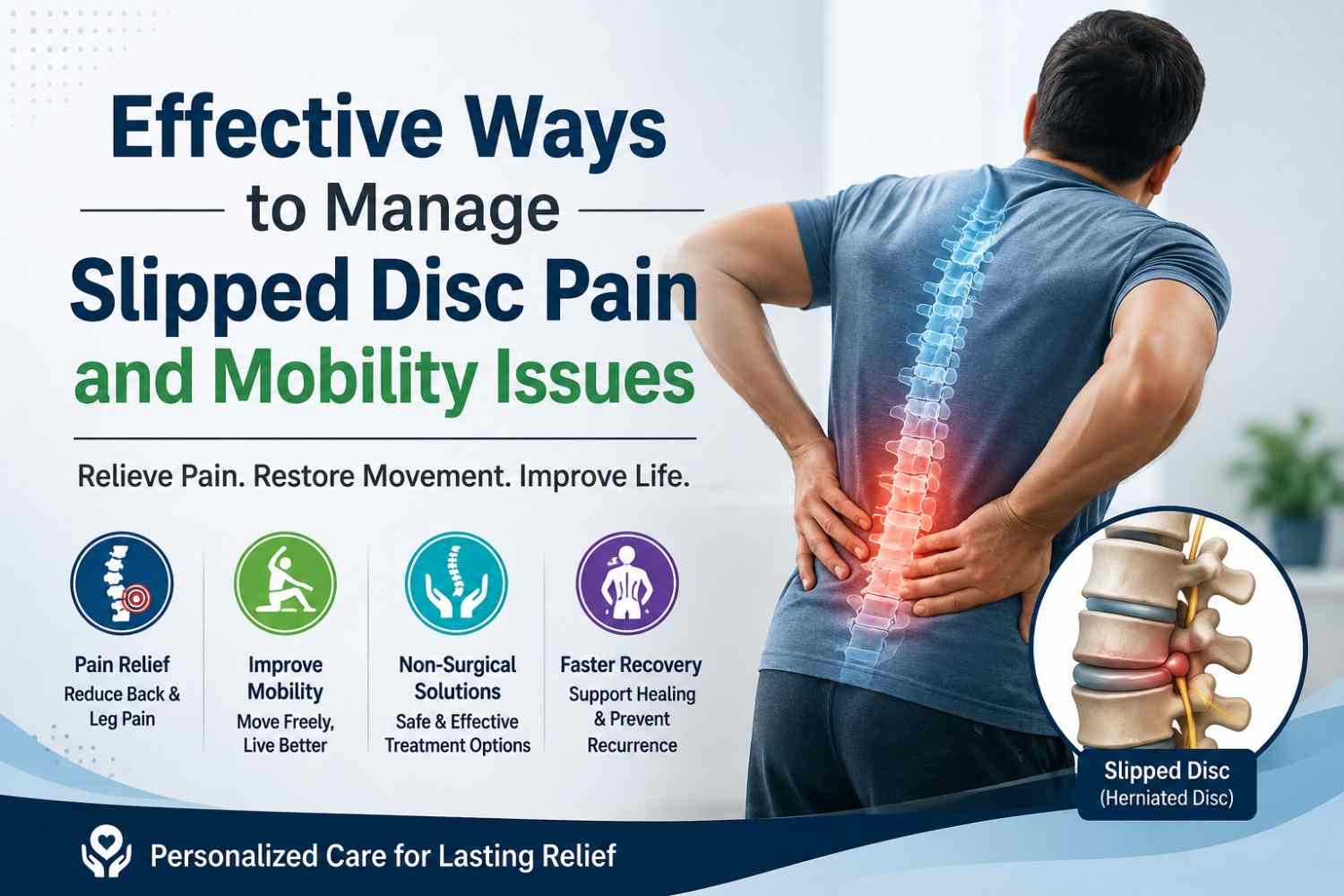
Effective Ways to Manage Slipped Disc Pain and Mobility Issues
A pain in the back can make even the simple task of tying your shoelaces an exercise in negotiating with your back. A slipped or herniated disc could be the reason behind your back pain, numbness, tingling sensation, weakness or pain radiating down to your legs. Those searching for Prolapsed intervertebral disc treatment in Chandigarh need to know that there is no universal way of dealing with this problem.
Understanding a Slipped Disc and Its Symptoms
The condition referred to as a slipped disc, a herniated or prolapsed disc, is characterised by part of the soft inner material of the disc that protrudes beyond the tough outer layer of the disc. This leads to irritation or compression of a nerve.
Some common symptoms are low back disc pain, pain in the buttocks or legs, numbness, tingling sensation, and muscle weakness. When the low back disc compresses the sciatic nerve, one will experience sciatica, slipped disc, and pain from the lower back/buttocks down the leg.
It is not always the case that a slipped disc will have symptoms. Some people might be having a disc problem without their knowledge, especially where the disc does not compress a nerve.
Take the first step toward better mobility and lasting back-pain relief. Call today to schedule your consultation.
What Does Slipped Disc Pain Treatment Usually Involve?
Treatment for Slipped Disc Pain normally starts conservatively, provided that there are no emergencies or neurological complications. Your health provider will test your symptoms, movement, muscle strength, reflexes, and sensation before making a decision on the need for further examination.
You may get treatment in the form of adequate pain medication, physiotherapy, changes in activity, and exercise depending on the personal condition. Not only does the purpose of the treatment include elimination of pain for several hours.
Slipped Disc Pain Relief: What Can Actually Help?
Unfortunately, there is no magic cure for slipped disc pain. Your back would love to have it; however, the medical field works otherwise.
Depending on each particular situation, the doctor can prescribe pain medicine or other treatment measures. Physical therapy could also be an option to help with movement, strengthening muscles, and making the activities of daily living easier.
Walking can be beneficial if it does not increase symptoms in your condition. However, exercises depend on each particular patient. Exercise that may relieve one patient will be harmful to another patient, so professional advice is necessary for patients with pain, numbness, and weakness.
Conservative Care vs Surgery
Most people with a herniated disc do not need surgery. Many improve with non-surgical treatment over time.
Surgery may become an option when symptoms do not improve with conservative care or when significant weakness, difficulty walking, severe ongoing pain, or bladder and bowel problems occur.
A Simple Treatment Decision Chart
Back or leg pain → Medical assessment → Identify nerve involvement →
Mild symptoms: activity modification + prescribed care + physical therapy → monitor recovery
Persistent symptoms: reassessment → possible imaging or specialist evaluation → targeted treatment
Weakness or severe neurological manifestations: prompt medical assessment is needed
This way of thinking allows Prolapsed intervertebral disc management in Chandigarh to remain centred on the real clinical situation and not the imaging diagnosis.
When You Should Not Ignore the Symptoms
There are some symptoms that call for immediate medical attention. Back pain accompanied by numbness around the genitals or buttocks, inability to urinate, loss of bladder or bowel control, and any significant loss of sensation in one leg or both should be brought to the attention of a doctor.
Difficulty walking is another symptom that needs immediate medical attention.
Where to Find Professional Guidance in Chandigarh
When patients are looking for treatment for a prolapsed intervertebral disc treatment in Chandigarh, it is necessary to do a clinical evaluation first before opting for a particular treatment method. Searches done through location will be helpful for patients in locating a suitable healthcare provider, such as Dr. Sanjeev Kalra from Niramaya The Mind Centre, but the right treatment for any patient must follow a clinical evaluation first.
The need for the separation of treatments for the spine and wellness treatments is essential. Panchakarma treatment in Chandigarh could be considered for its wellness effect, but it is important that it does not take the place of the clinical evaluation for back pains, nerve compression, weakness or emergencies. It is crucial that Ayurveda and conventional medicine are both evaluated by experts when taken simultaneously.
For those who are interested in knowing more about the overall topic of wellness, consider reading “Panchakarma Therapy vs Detox Diet: Which Is More Effective?”
Take the Next Step Toward Better Mobility
Constant back or leg pain should not be allowed to become something you just get used to living with. See a qualified medical practitioner to determine what is causing your problems and decide on a treatment that is right for you.
Schedule a consultation today and start walking safer and taking better care of your back.